GHK-Cu (Glycyl-L-Histidyl-L-Lysine Copper) is a naturally occurring tripeptide first isolated from human plasma in 1973 by Dr Loren Pickart. In the decades since, it has become one of the most extensively studied compounds in cosmetic dermatology — and for good reason. The clinical evidence behind GHK-Cu is exceptional.
What Is GHK-Cu?
GHK-Cu is a copper-binding peptide that occurs naturally in human plasma, saliva and urine. Plasma concentrations are highest in youth (~200 ng/mL at age 20) and decline significantly with age (~80 ng/mL at age 60). This decline is closely correlated with the visible signs of skin ageing — thinner skin, reduced collagen density, impaired wound healing.
The copper ion is critical. GHK acts as a carrier, delivering bioavailable copper directly into cells where it activates enzymes involved in collagen synthesis, antioxidant defence and tissue remodelling.
Clinical Evidence: What GHK-Cu Actually Does
1. Stimulates Collagen & Elastin Synthesis
A landmark study by Pickart & Margolina (2018) demonstrated that GHK-Cu upregulates collagen synthesis by activating fibroblasts — the cells responsible for producing the structural proteins of skin. Separate studies have shown increases in collagen type I, III and IV, as well as elastin and glycosaminoglycans (GAGs) that maintain skin volume and hydration.
2. Accelerates Wound Healing & Skin Repair
GHK-Cu has been shown to accelerate wound closure in both animal models and human clinical trials. It promotes angiogenesis (blood vessel formation), reduces inflammation and stimulates epidermal keratinocyte migration — all critical steps in the wound healing cascade. This makes it particularly effective for post-procedure recovery (laser, microneedling, chemical peels).
3. Reduces Fine Lines & Hyperpigmentation
A double-blind, placebo-controlled study published in the Journal of Cosmetic Dermatology found that 12 weeks of topical GHK-Cu application significantly reduced periorbital wrinkle depth, improved skin laxity and reduced irregular pigmentation compared to placebo. Participants also reported improvements in overall skin clarity and tone.
4. Antioxidant & Anti-inflammatory Activity
GHK-Cu is a potent antioxidant. It has been shown to reduce the activity of pro-inflammatory cytokines (TNF-alpha, IL-6) and protect skin from UV-induced oxidative damage — a key driver of photoageing. Unlike many antioxidants that are consumed in the process, GHK-Cu appears to catalytically regenerate superoxide dismutase (SOD) activity.
5. Gene Expression: 4,000+ Genes Regulated
Perhaps the most remarkable finding comes from genomic studies. GHK-Cu has been shown to modulate the expression of over 4,000 human genes, including those involved in collagen metabolism, inflammation, oxidative stress and nervous system repair. Its biological reach extends far beyond a simple cosmetic ingredient.
How to Use GHK-Cu Effectively
For topical use, GHK-Cu should be applied to clean skin before heavier moisturisers. Because it works at a cellular level to stimulate repair processes, consistency matters more than frequency — daily use over 8–12 weeks yields significantly better results than sporadic application.
- Concentration: 0.1%–1% (100mg per 100ml is clinically effective)
- Frequency: Once or twice daily — morning and/or evening
- Application: Apply to cleansed skin before serums and moisturisers
- Compatibility: Pairs well with hyaluronic acid and niacinamide; avoid combining with strong vitamin C at the same step (can chelate copper)
- Timeline: Visible texture improvement in 4–6 weeks; significant firming and line reduction by week 12
GHK-Cu vs Other Anti-Ageing Actives
| Active | Collagen Stimulation | Irritation Risk | Photosensitivity |
|---|---|---|---|
| GHK-Cu | High | Very Low | None |
| Retinol | High | Moderate–High | Yes |
| Vitamin C | Moderate | Low–Moderate | Slight |
| Niacinamide | Low | Very Low | None |
| Peptides (Matrixyl) | Moderate | Very Low | None |
GHK-Cu offers collagen stimulation comparable to retinol without the irritation, purging or photosensitivity.
Common Questions
How long does GHK-Cu take to work?
Most users see improvements in skin texture and hydration within 4–6 weeks. Significant changes to fine lines and skin firmness are typically visible after 8–12 weeks of consistent daily use.
Is GHK-Cu safe for sensitive skin?
Yes. GHK-Cu is remarkably well-tolerated across skin types. Unlike retinoids it doesn't trigger a purge phase, doesn't increase UV sensitivity and doesn't cause dryness or peeling. It is suitable for daily use even on reactive or post-procedure skin.
Can I use GHK-Cu with retinol?
Yes — many dermatologists recommend pairing the two. Use GHK-Cu in the morning and retinol at night for complementary collagen stimulation without overlap.
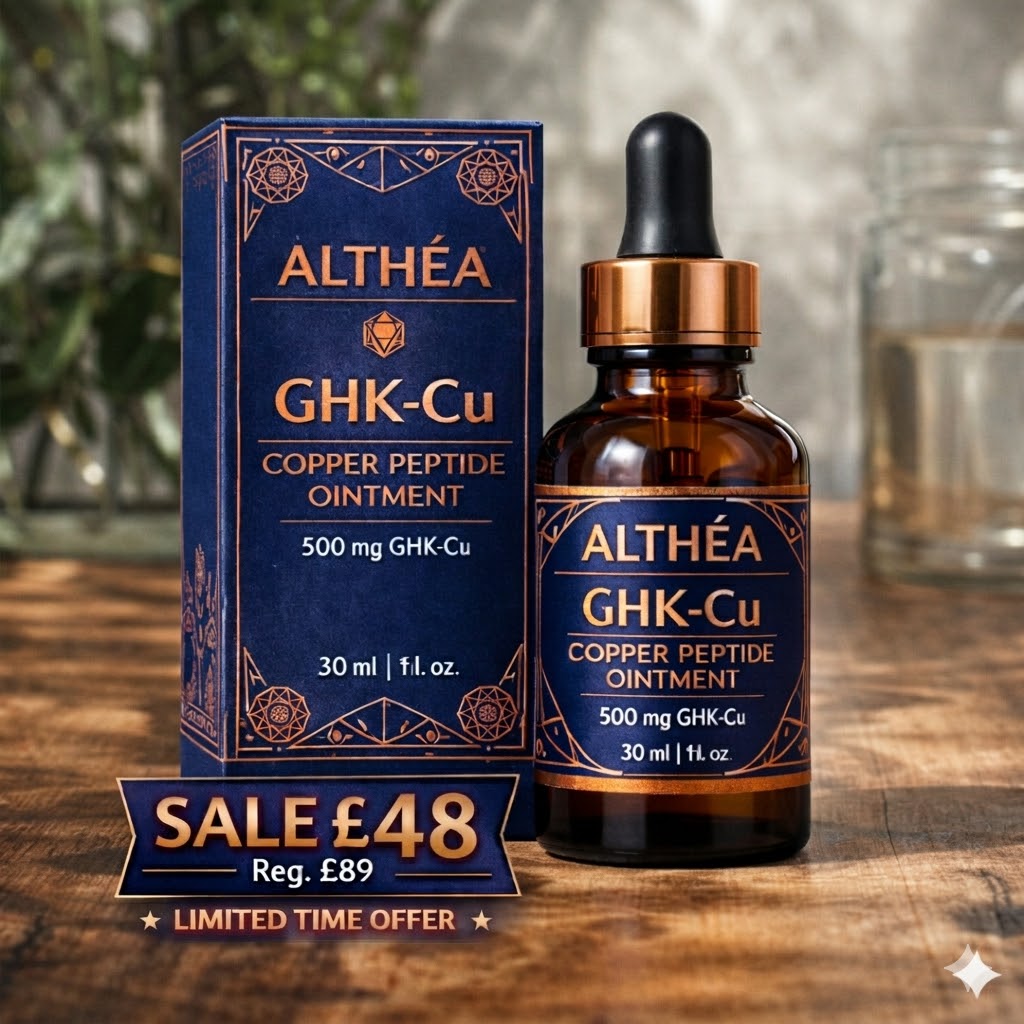
Featured Product
GLOW 100MG — GHK-Cu Copper Peptide Serum
100mg GHK-Cu per 100ml bottle · Was £89, now £48 · Free UK delivery